When steelwork runs late, the cost spreads beyond the steel package. Cranes sit booked but idle. Follow-on trades wait for a frame they cannot build around. A connection that does not fit can hold up a whole floor while drawings are checked and parts are reworked. Most of these delays can be prevented before a single beam leaves the workshop. Speed matters less than how your steel fabrication contractor controls information, quality and responsibility from design through to installation.
This article covers where steelwork delays usually start and how capable steel fabricators reduce that risk. It ends with a checklist of questions to ask before you appoint one.
Where Steelwork Delays Usually Start
Steelwork rarely goes wrong on site. The problem usually shows up on site, but it started earlier, often at a point where information or responsibility passed from one party to another.
Handover gaps. On many projects, design comes from one company, fabrication from another and erection from a third. Each handover is a chance for something to be lost, misread or assumed.
Design-to-workshop disconnects. If the approved model has to be re-entered by hand before steel is cut and drilled, small errors creep in. A hole in the wrong place is a minor mistake in the workshop and a major one at height.
Poor fit on site. When parts arrive out of tolerance or without clear identification, erection slows while the crew works out what goes where, or waits for corrections.
Unclear accountability. When a problem appears and three companies are involved, time goes on deciding whose problem it is before anyone fixes it.
Finishing left as an afterthought. Shot-blasting, painting and galvanising take time. If nobody has built them into the programme, finished steel arrives later than planned.
Handling and transport constraints. Large assemblies need lifting capacity, space to stage and practical access for vehicles. A cramped workshop can become a bottleneck on bigger packages.
Site teams who were never part of the process. Erectors who did not see the steel being designed or made have no direct line back to the people who did. Every query becomes a phone call to another business.
| Delay point | What usually causes it | How it can be prevented |
| Steel does not match the design | Manual re-entry of data between design and workshop | Design software linked directly to CNC machinery |
| Parts do not fit on site | Inconsistent tolerances or unclear part identification | Machine-controlled cutting and drilling, with parts scribed for identification |
| Queries stall erection | Site team separate from design and fabrication | The same business designs, fabricates and installs |
| Finished steel arrives late | Finishing not coordinated with fabrication | Shot-blasting, painting and galvanising planned as part of the package |
| Large assemblies hold up the workshop | Limited lifting, storage or laydown space | Adequate crane capacity, storage and staging areas |
| Weld quality questioned | Unclear welder competence | Coded welders in the workshop and on site |
| Problems bounce between suppliers | Split responsibility | One accountable team from model to installed steel |
How a Capable Fabricator Reduces Risk Before Steel Reaches Site
Keep the model and the machines on the same information
At DPL Fabrications, our designers and draughtsmen model in Tekla, and our design office links directly to the CNC machinery in our workshop. Our machines are compatible with industry-standard NC1 data, so the information that cuts and drills your steel comes straight from the approved model. What we model is what we make. This removes one of the most common sources of fit problems: data being copied by hand between drawing and machine.
Make every part easy to identify
Our CNC equipment includes integrated scribing for part identification. That sounds like a small detail, but it matters on site. When each component is clearly marked, the erection crew can match parts to drawings quickly, without guesswork or sorting through a mixed delivery.
Control weld quality from the start
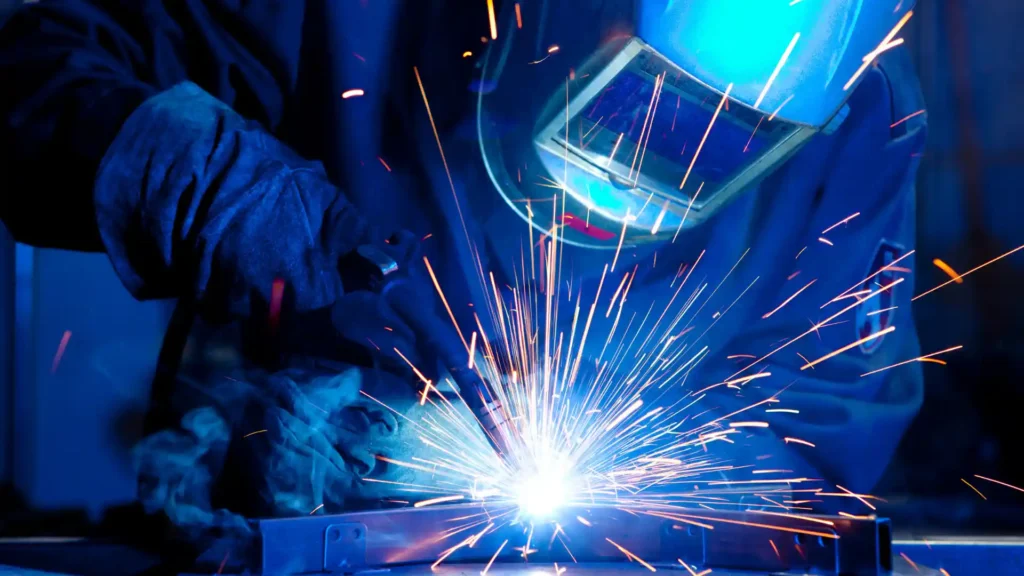
Our welding is carried out by coded welders who work within our own teams, in the workshop and on site. Weld quality is one of the things a client or inspector is most likely to question. A query about it can stop work until it is answered, so clear competence reduces that risk.
Build finishing into the programme
We work with trusted local partners for industrial shot-blasting, painting and galvanising. Because finishing is planned as part of the fabrication package rather than arranged separately at the end, it is less likely to become the step that holds up delivery.
Let the people who made the steel install it
Our site teams hold up-to-date CSCS certifications and project-relevant qualifications, and they install the steel our workshop produces. If a question comes up during erection, it goes back to the people who designed and fabricated the part, inside the same business. That shortens the gap between finding a problem and solving it.
Why Workshop Capacity and Machinery Matter to Your Programme
A fabricator can only plan reliably if the workshop can physically handle the work. Capacity is not just about size. It is about whether large, heavy or complex assemblies can be lifted, processed, stored and dispatched without becoming a bottleneck.
Our head office and fabrication workshop are on Dock Road in Bromborough. The site has a 17,000 ft² fabrication and support facility on a 1.35-acre site. In practical terms, that means:
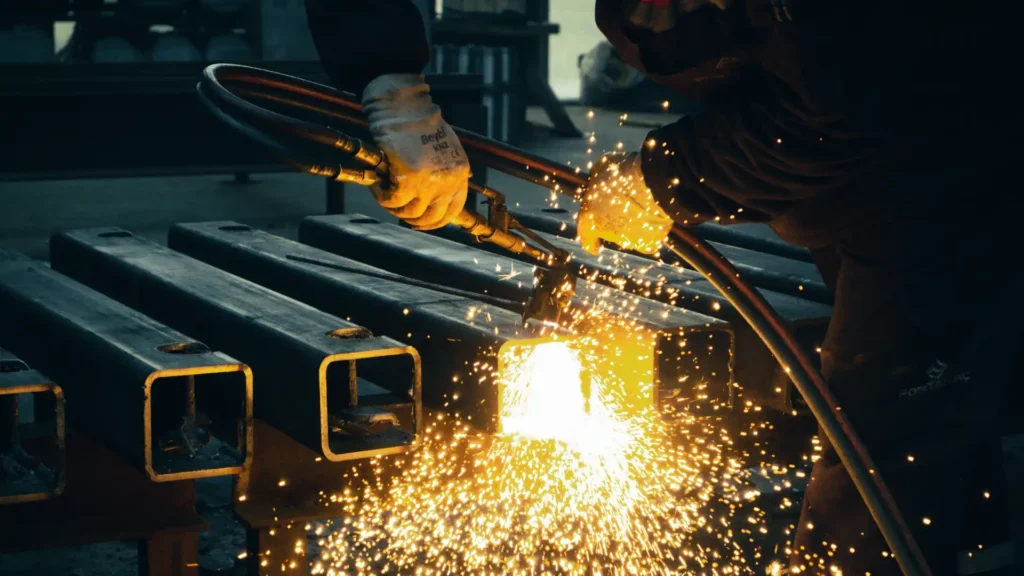
- Two 10-tonne overhead cranes with ample headroom, so large assemblies can be handled safely inside the workshop
- A Ficep Excalibur CNC Drill Line that processes structural steel profiles up to 610 mm deep and up to 12 m long, with laser scanning for automatic profile location and an automatic tool changer to reduce downtime between operations
- A Ficep Gemini that accepts plates up to 2100 mm x 8300 mm, drills holes up to 50 mm diameter in mild steel and plasma cuts mild steel up to 70 mm thick
- Material storage and fabrication laydown areas, so steel can be fabricated, checked and staged ahead of delivery
- Transport access across the site, with the workshop 3.5 miles from Junction 5 of the M56
You can see more about the equipment on our workshop and machinery page. When you ask a fabricator about delivery dates, it is worth asking what is actually on the shop floor. The answer tells you how much of the work they control directly.
Why Regulated-Sector Discipline Helps on Ordinary Projects
Safety-critical sites do not tolerate improvisation. Work is planned, documented and checked because the consequences of getting it wrong are serious. Those habits are just as useful on a conventional building project, where the main risk is time and cost rather than safety alone.
We have worked in the nuclear sector since 2013 and maintain a continuous, full-time site presence at EDF Heysham Power Stations and Urenco. Our nuclear team includes suitably qualified and experienced personnel (SQEP) with full CTC vetting. We also work in petrochemical and other regulated environments. The same approach to planning, quality and documentation carries across to every job, whatever its size.
Accreditations also affect programme in a less obvious way. Many clients and main contractors check prequalification before a supplier can start. DPL achieved BS EN 1090 accreditation for structural steel in 2015. We are also an ISO 9001:2015 certified company, a Constructionline Gold Member, a CHAS Accredited Contractor and SafeContractor Approved, and we hold SSIP and EcoVadis. Having these in place means one less approval to chase before work begins. You can read more about our background, which goes back to our founding as a family-run business in 2002, on our About Us page.
A Checklist Before You Appoint a Steel Fabricator
Use these questions to judge delay risk before you award a steelwork package. The answers will tell you far more than a headline delivery date.
- Who designs, who fabricates and who installs? If the answer is three different companies, ask how information and responsibility pass between them.
- How does the design reach the workshop machinery? Look for a direct link between design software and CNC equipment, rather than manual re-entry.
- How are parts identified for site? Clear marking speeds up erection and reduces mistakes.
- Who carries out the welding, and how is competence evidenced? Ask whether welders are coded and whether they work in the workshop, on site or both.
- How is finishing handled? Check that shot-blasting, painting or galvanising is planned into the programme, not arranged as an afterthought.
- Can the workshop handle your largest assemblies? Ask about crane capacity, processing limits, storage and laydown space.
- Which accreditations do they hold? Confirm they meet your own prequalification requirements before you need them on site.
- What happens when something does not fit? The answer shows you how accountability really works.
Questions Clients Often Ask
Can you work to our own engineer’s design?
Yes. Our engineering team works to your technical specification. We can also provide structural steel design in-house if you need it. Either way, once a design is approved, it feeds into fabrication through the same model-to-machine process.
Does using one company for everything remove all delay risk?
No arrangement removes every risk. Site conditions, design changes and wider programme pressures can still affect timing. What an integrated team does is remove the handover gaps where many avoidable delays start, and it makes problems quicker to resolve when they do arise.
What should we send when we first get in touch?
Drawings, a specification or an outline brief are all useful starting points. Your programme dates and any site constraints, such as access or working restrictions, help us see early where delay risks might sit.
Talking Through Your Steelwork Package
The best time to reduce delay risk is before the steel is ordered, while design, fabrication, finishing and installation can still be planned as one sequence. Whether you need structural steelwork, secondary steelwork such as platforms, walkways and staircases, or bespoke stainless steel fabrication, an early conversation lets us flag issues before they reach site.
Speak to our team on 0151 645 4544 or email info@dplfab.com to talk through your requirements. You can also send a message through our contact page.